The grout was never grey
It drifted one shade at a time, which is why nobody notices until someone points it out.
September 9, 2026 · 4 min read
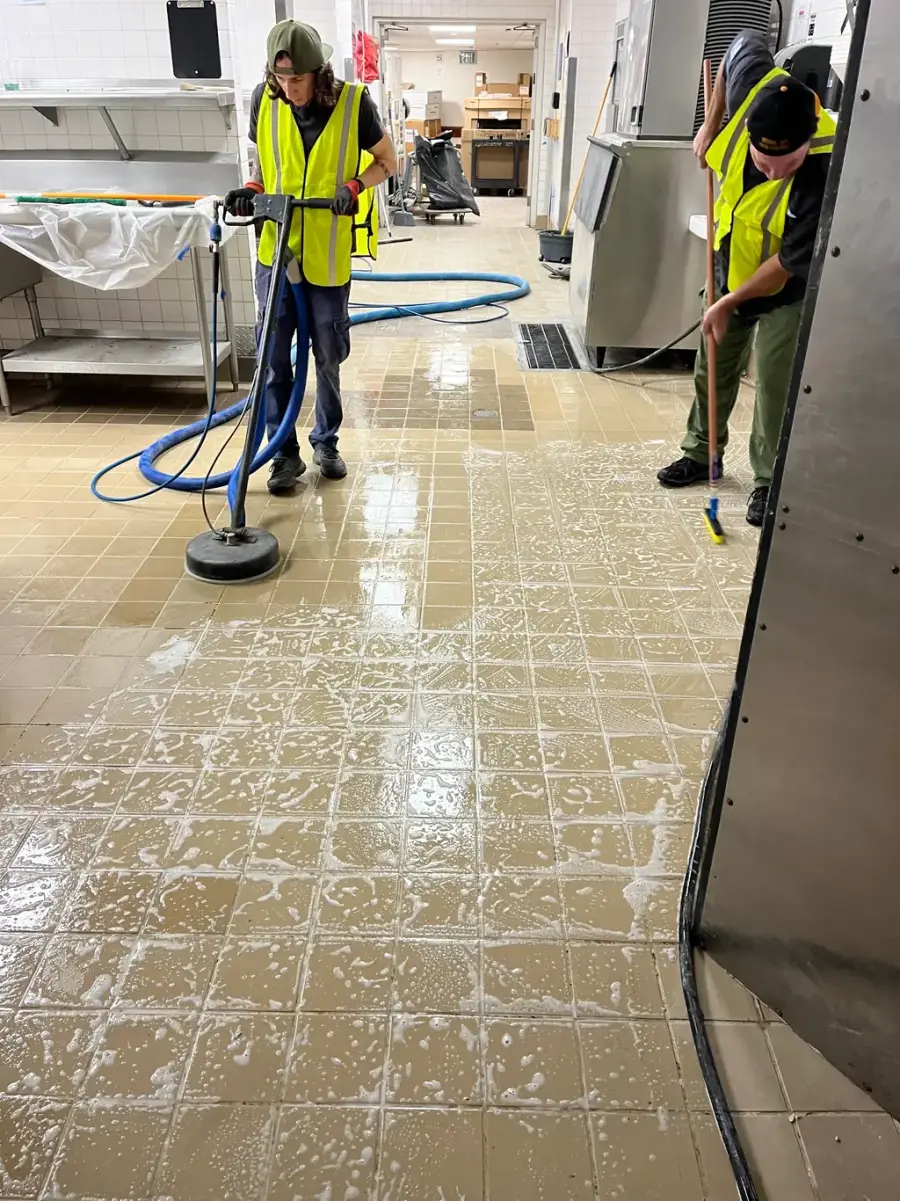
Almost nobody chooses grey grout for a cream tile floor. Yet a remarkable number of kitchens and bathrooms have it, and the owners are genuinely surprised when we tell them what colour it started as.
Grout darkens gradually, a shade at a time over years, so there is never a day when it looks wrong. You only see it when a section gets cleaned and the contrast appears.
Why the joints go first
Cement grout is porous. It is essentially a hard sponge, and it sits a fraction below the face of the tile, which means it is both absorbent and slightly recessed. Every drop of water that lands on that floor drains toward it.
The tile itself, especially glazed porcelain, is close to non absorbent. Soil cannot get into it, so it sits on the surface and wipes off. The joint next to it has no such defence.
Mopping is part of the problem
This is the part people do not enjoy hearing. A mop lifts soil off the tile face, suspends it in the bucket water, and then spreads that water back across the floor. The tile sheds it. The grout drinks it.
So a floor that is mopped often can have dirtier grout than one that is mopped rarely, because it has had more dirty water pushed into the one part that cannot let go of it. Mopping harder genuinely does make it worse.
Household floor sprays add their own layer. Many leave a film that dulls the tile and gives soil something to stick to, which is why a floor can look hazy no matter how recently it was cleaned.
What professional cleaning actually does
Instead of wiping the joint, we flush it. Heat and pressure with a solution matched to the joint, then immediate extraction so the loosened soil leaves the floor rather than settling back into it.
That last part is what separates the result from a rented machine. If the dirty solution is not pulled back out, it dries back into the grout and the floor looks worse in a week.
- Cement grout responds well and usually comes back close to its original colour
- Epoxy grout is far less porous and rarely needs the same intervention
- Natural stone needs different chemistry entirely, because acids will etch a polished surface permanently
- Sanded and unsanded joints behave differently under pressure
Stone is not tile
Travertine, marble, limestone and slate all react differently to acid and to abrasion, and the wrong product can permanently dull a polished stone. This is where a general purpose bathroom cleaner does real damage, usually to the most expensive floor in the house.
Polishing and honing are separate from cleaning as well. If a stone floor has lost its finish rather than simply got dirty, cleaning alone will not bring the reflection back, and anyone who tells you otherwise is selling you a disappointment.
Sealing, and what it does not do
Sealer does not make a floor waterproof and it is not permanent. What it does is buy you time between the spill and the stain, and on a kitchen floor or a shower tray that gap is the whole difference.
The important rule is sequence. Sealing has to follow cleaning, never precede it, because sealing a dirty joint simply locks the grey in and commits you to it until the sealer wears off.
The awkward areas
Vertical work takes longer than floors and fails differently, usually soap film and mildew rather than ground in soil. Shower floors and the joint where tile meets the tray are where problems start, because that is where water sits longest.
Where grout has actually failed rather than just discoloured, it needs replacing rather than cleaning. We would rather regrout a joint that has gone than clean carefully around it and leave you with the same problem.
If you want to know what colour yours was, we will clean a test area and show you. Most people find that more persuasive than anything written down.
How to keep it once it is back
Change the water more often than feels necessary, because a mop is only as clean as the bucket. Better still, use a flat mop with a washable pad you can rinse under a tap, so the soil leaves the room instead of circulating around it.
Skip the supermarket shine products entirely. They are what puts the film on the tile in the first place, and once there is a film you are cleaning the film rather than the floor. Warm water and a neutral cleaner is genuinely better for most tile, and it is what we recommend to customers who ask what to buy.
Deal with spills on grout quickly rather than thoroughly. On a porous joint, speed matters far more than effort, because the difference between a mark and a stain is measured in minutes.
All American Carpet & Tile, (858) 533-7003
Call (858) 533-7003More articles
Why the pet smell comes back a week after you clean it
The spot looks fine. Then the first warm day arrives and the room smells again.
What actually happens to your rug when it leaves the house
It takes longer than cleaning it in your living room, and that is the entire point.