Ripples in your carpet are a stretching problem, not a wear problem
The most common reason people replace a carpet is a fault that takes an afternoon to fix.
September 9, 2026 · 4 min read
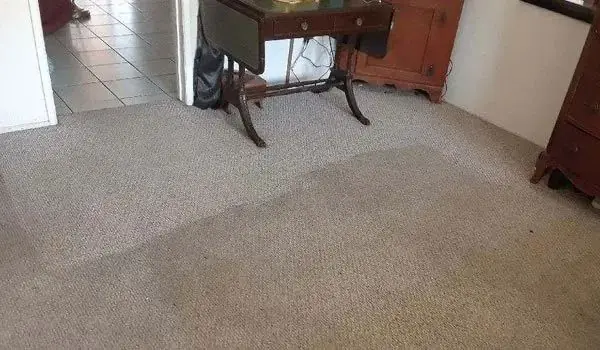
A carpet that has gone wavy looks finished. It reads as old and tired, it catches the light in a way that makes the whole room look neglected, and it is the single most common reason we hear for someone deciding to replace a floor.
In most cases the carpet is fine. It has come loose, which is a different problem with a much cheaper answer.
Carpet relaxes
Carpet is installed under tension, stretched across the room and hooked onto gripper strips at the edges. Over years that tension eases. The backing relaxes, humidity swings move it, underfloor heating moves it, and heavy furniture dragged across it moves it.
Once there is slack, it has to go somewhere, and it collects into waves that usually run across the room rather than along it. In San Diego the humidity swing between a marine layer morning and a dry afternoon does more of this than people expect.
Why waiting makes it expensive
A ripple is not just cosmetic. The crest of the wave is now the highest point in the room, so every footfall lands on it. It wears along that line at several times the rate of the flat carpet either side.
That produces a visible worn stripe following the shape of the ripple, and unlike the ripple itself, wear does not come back. Stretch it at that point and you get a flat carpet with a permanent line across it.
There is also the trip hazard, which matters more in a house with anyone elderly or unsteady in it.
What power stretching is
A power stretcher braces against one wall and pulls the carpet properly tight across the room before it is re hooked onto the gripper and re trimmed at the edges. It is not the same as a knee kicker, which is a tool for small adjustments and cannot generate the tension a room needs.
That distinction is why some restretching jobs fail within a year. If the carpet was pulled by knee alone, it was never at the right tension to begin with.
- Furniture comes off the area, which is most of the disruption
- The carpet is released from the gripper along the relevant edges
- It is stretched, re hooked and trimmed
- Ripples are gone the same day, and it is walkable immediately
The other repairs worth knowing about
Burns, tears and pet damage are patched. A piece of matching carpet, usually taken from inside a wardrobe or from under a sofa, is set into the damaged area with the pile running the same direction as the surrounding floor.
Pile direction is the detail that separates an invisible patch from an obvious one. Get it wrong and the patch is fine from one side of the room and glaringly visible from the other, because carpet reflects light differently along the pile than against it.
If you have a remnant left over from the original installation, keep it. It is worth considerably more than the space it takes up in the garage, because a patch cut from your own carpet has aged the same amount as the floor around it.
Seams
Seams fail where two rolls of carpet meet, almost always in a doorway or a hallway where traffic crosses them. Once the edge begins to fray it accelerates quickly, and a seam left open for a year often needs a patch as well as a re seam.
Re seaming closes it properly rather than gluing the surface back down, which is the repair that lasts a month.
When repair is the wrong answer
There is a point where we will tell you to replace. If the backing has delaminated across a wide area, or the carpet has been soaked repeatedly and the pad has failed, a repair is money spent twice.
We would rather lose a repair than sell you one that comes back in six months. Send a photograph of the problem and we can usually tell you whether you are looking at a patch, a stretch, a seam, or a new floor.
How to tell which one you have
Stand at the doorway with the light coming across the room rather than from behind you. Ripples show as shadow lines running roughly parallel to each other. Genuine wear shows as a change in colour and texture along the routes people walk, and it does not move when you push the carpet with your foot.
If you can slide the carpet slightly under your shoe, you have slack and a stretch will fix it. If the pile is crushed flat and lighter in colour along a path, that is wear, and it will still be there afterwards. Most rooms we look at have some of both, and the stretch is still worth doing.
All American Carpet & Tile, (858) 533-7003
Call (858) 533-7003More articles
Why the pet smell comes back a week after you clean it
The spot looks fine. Then the first warm day arrives and the room smells again.
What actually happens to your rug when it leaves the house
It takes longer than cleaning it in your living room, and that is the entire point.